

Who Owns African Culture? Just Ask Laduma Ngxokolo

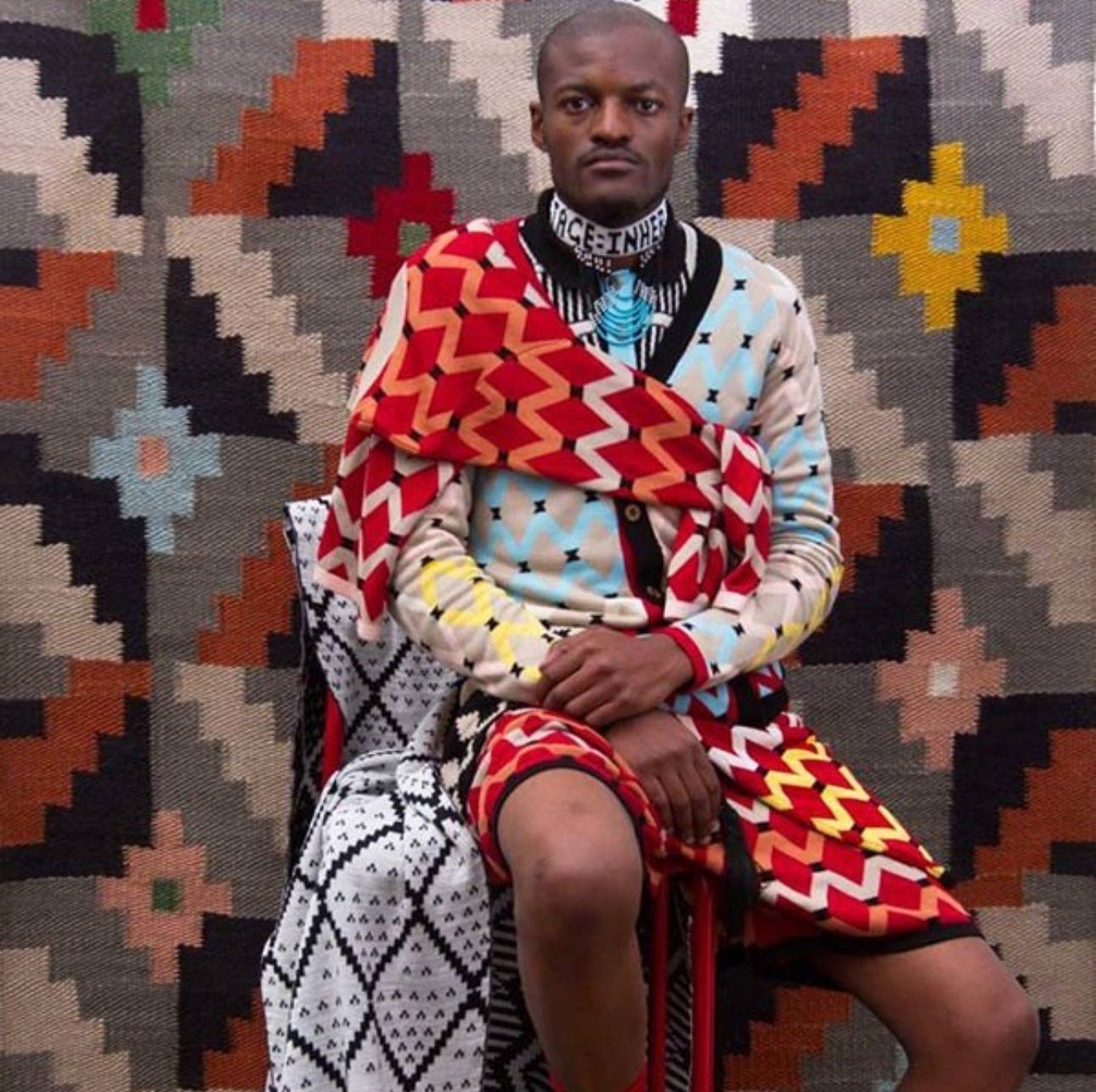
For designer Laduma Ngxokolo, the creative force behind the luxury knitwear label MaXhosa Africa, which has attracted the likes of celebrities including Beyoncé and Michelle Obama, at the heart of his artistry, and for himself, is the African principle of ubuntu.
Ubuntu emphasizes that individual success is intertwined with the well-being of the community.
The philosophy is not just an idea for Ngxokolo; it is a guiding force that has shaped his brand since its inception in 2010. By keeping most of his production in Southern Africa, he ensures that his business supports local artisans and craftspeople, fostering social development and economic growth within the region. He believes fashion should do more than look good; it should uplift and empower communities, creating a ripple effect of positivity and progress.
Through MaXhosa Africa, Ngxokolo deftly combines contemporary style with rich cultural heritage, proving that luxury and social responsibility can go hand in hand.
“I knew I wanted this brand to focus on social development,” he told The New York Times. “The wool that is being sourced here has to have an impact on the community by creating jobs.”
With the money he saved, he invested in a manufacturing facility in Johannesburg, a move that allowed him not only to oversee production closely but also to ensure that his venture directly benefited local artisans and workers. Today, he employs more than 300 people, providing stable jobs and supporting an ecosystem where creativity flourished and people felt empowered.
By 2012, as his brand gained traction, Ngxokolo was recognized as a rising star in the fashion world thanks to his innovative fusion of traditional Xhosa culture with modern high-end knitwear. His designs, which prominently feature intricate beadwork patterns, dazzling colors and deep symbolism, have captivated a global audience seeking authentic African luxury. This unique approach did not just honor his heritage; it also served as a powerful narrative about identity and aspiration.
That global admiration for Ngxokolo’s work turned into outright appropriation when he became embroiled in a copyright infringement dispute with the Spanish fast-fashion retailer Zara in 2018. Zara was selling socks that featured designs identical to MaXhosa’s signature patterns, inspired by the traditional beadwork of South Africa’s Xhosa people. This led to public outcry and legal action, forcing Zara to remove the items while an investigation was conducted.
The incident ignited a significant conversation about African design rights within the global fashion industry, where creators often grapple with a fine line between innovation and exploitation.
“What happened was that I was here in Johannesburg and started receiving DMs from New York and London,” the designer shared in an interview in 2019. “Two clients of mine sent pictures of socks at Zara and asked if I had collaborated with them. I started receiving more messages and consulted with my lawyers.”
Ngxokolo continued: “They removed the product from their websites and stores worldwide. They cooperated and were submissive,” he said.
The designer himself is part of the Xhosa community.
However, merely accusing the Spanish retailer of cultural appropriation did not give the Xhosa entrepreneur his strong position; it was his legal rights to his designs that did.
“I was fortunate that even as a student I had been advised to protect my design and how to register for copyright with my material,” the Nelson Mandela University textile design and technology graduate explained. “In protecting intellectual property, it requires one to be educated around the laws centered on the creative space. In South Africa, there are various entities that specialize in intellectual property law.”
Today, thanks to Ngxokolo’s sharp business sense, genuine storytelling and commitment to high quality and craftsmanship, MaXhosa Africa is thriving. But for him personally, what motivates him is not just the brand’s success; it is about protecting and giving back to the community that has given him so much.
“We at MaXhosa Africa believe that our job is not to sell and that our job is to become cultural advocates,” he said. Along with his siblings, he created the Lindelwa Foundation in their mother’s honor, offering support for students and mentorship for young professionals. “I call myself a head diplomat of the brand because we are trying to push an agenda that has a vested interest in our culture, people and our economy.”
Ngxokolo, now 38, grew up in Port Elizabeth, a coastal city in South Africa’s poorest province that was renamed Gqeberha in 2021. Life took a challenging turn when he lost his mother, Lindelwa, at 15. With her passing, he and his older sister, Tina, stepped up to care for their two younger siblings. Lindelwa had instilled a strong sense of responsibility in them, urging them not to seek outside guardianship. She believed the lessons she imparted on managing a home, supporting one another and making money by selling knitted goods at the local market were all they needed. This blend of resilience and familial duty shaped Ngxokolo’s character from a young age.
As a rite of passage, he also participated in the traditional initiation ceremony of the Xhosa people, an experience that took him to the mountains, where he left childhood behind. The ceremony symbolizes the transition to adulthood and involves participants parting with childhood belongings. Family members typically bestow gifts upon initiates, often including high-quality Western clothing to signify their new status.
“You’d learn more about yourself as a character and about your cultural history in general,” Ngxokolo told Yola Mizzi, a reporter for the Styles section at The Times and a member of the 2025-26 Times Fellowship class, before expressing frustration with the clothing initiates were typically given. “In the end, why were we wearing Western clothes? Why are we going to end up looking like English men?”
Ngxokolo felt uncomfortable seeing young South African men sporting newsboy caps and argyle sweaters, and the observation motivated him to want to change fashion. While his commitment to South Africa and Xhosa culture has influenced his career and played a significant role in MaXhosa Africa’s success, he attributes much of his guidance to his mother.
Before she died, she took him to the Salvation Army, pretending they were going to buy a color television, which they did not have at home. Instead, she bought a knitting machine to produce fabric they could sell at the local market, much to the disappointment of his younger siblings.
Ngxokolo shared with Mizzi how his mother believed firmly in instilling clothing-making skills in her children, a lesson that later became a lifeline. After her passing, he found solace in knitting scarves and beanies while attending Lawson Brown High School. With an eye for the school’s colors, he sold the accessories at prices lower than the official school store, quickly gaining popularity. The venture honed his craft and laid the groundwork for future ambitions.
Driven by passion, he enrolled in a textile design and technology course at Nelson Mandela University, where his thesis focused on alternative attire for newly initiated Xhosa men. Drawing inspiration from Xhosa history and culture, he designed garments using wool and mohair sourced from Port Elizabeth, mixing bold colors and geometric patterns that contrasted with the subdued hues traditionally worn during initiation. The work celebrated heritage while pushing contemporary fashion boundaries.
His rethinking of initiation attire caught the attention of influential figures, including Ravi Naidoo, founder of Design Indaba, an annual creative conference in Cape Town. Ngxokolo was invited to present his work to an international audience of scholars, artists and designers.
The response was overwhelmingly positive, generating praise and 300 orders, along with inquiries about his fashion label. The catch was that Ngxokolo did not yet have a label and had limited funds. Undeterred, he recorded the orders, confident he would find a way to fulfill them.
Among those impressed was Hanneli Rupert, founder of Merchants on Long, a high-end Cape Town store featuring African designers. Ms. Rupert, the daughter of Johann Rupert, chairman of Richemont, helped Ngxokolo complete the 300 orders and paid him 450,000 rand, about $26,000.
“What Laduma was doing already was completely different to anyone else in terms of design, integrity and authenticity,” Ms. Rupert said.
When Ngxokolo founded MaXhosa Africa, his goal was to bring cultural clothing into the mainstream, celebrating South Africa’s heritage while disrupting a fashion scene dominated by Western styles. By incorporating traditional Xhosa motifs into contemporary designs, he carved a niche that resonated locally and globally, encouraging other designers to embrace their own roots.
“Many brands we come across, like Hermès, have heritage stories we find exciting,” he said. “But we are not sharing our own as a form of decolonization of our history to help us find a new form of confidence.”
Differentiating himself from peers, Ngxokolo focused on wealthy South African consumers rather than international validation. His brand has nine independent stores, and although he shows at Paris Fashion Week, 90% of sales come from local shoppers. Still, as the brand grew, questions arose about pricing. MaXhosa items range from $500 to more than $3,000 in a country where the average annual household income was about $5,600 in 2023.
“I think that question was more ‘How dare you?’ rather than ‘Why are you expensive?’” he said.
“My responsibility was to open up about the brand and my dream. I had to tell people about the materials and who made the garments. After opening up, I didn’t have to explain.”
Nearly all MaXhosa clothing is made by South Africans. The craftsmanship benefits the economy and preserves cultural heritage in an irreplaceable way. While the company communicates this value to buyers beyond his community, Ngxokolo believes his focus must remain on giving back.
“I ultimately do it for the next generation, my family, job creation and our people.”