

This Day in History: December 26th

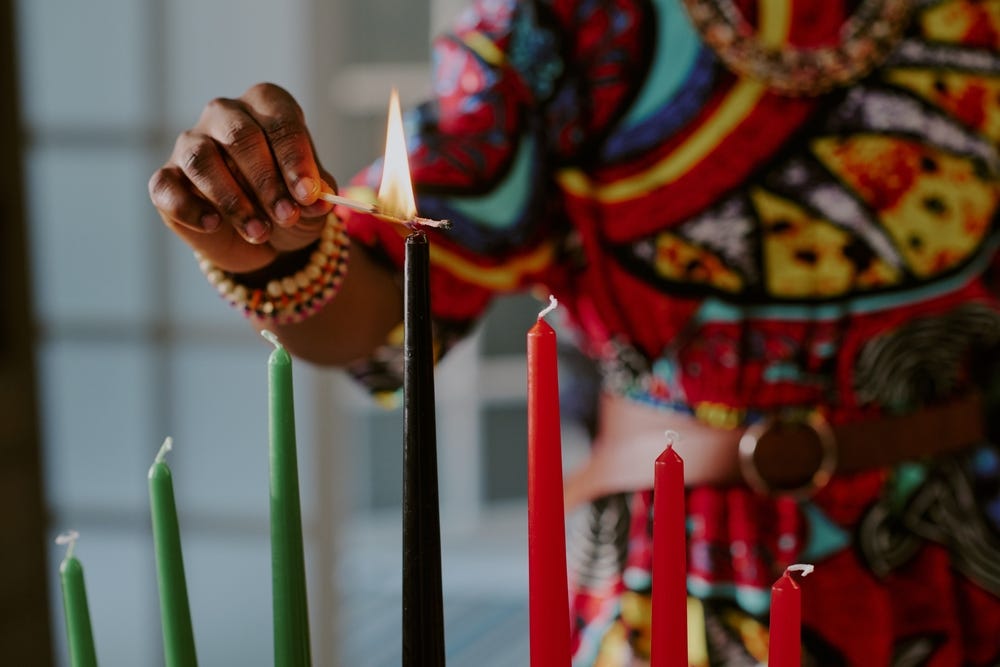
This day in history, December 26, marks the birth of Kwanzaa.
Kwanzaa was created by activist and scholar Maulana Karenga in the aftermath of the Watts riots in Los Angeles, as Black communities across the country wrestled with questions of identity and cultural survival.
Karenga established Kwanzaa as a non-Christian holiday centered on African American history and values. His goal was to give Black people an opportunity to celebrate themselves and their heritage rather than adopt traditions rooted in the dominant culture. The holiday was intended as a cultural intervention, grounded in the belief that cultural identity was essential to social and political progress.
The name Kwanzaa comes from the Swahili phrase “matunda ya kwanza,” meaning first fruits. The celebration draws inspiration from African harvest festivals practiced across West, East and Southeast Africa. Karenga added an extra “a” to the spelling of Kwanzaa to create a seven-letter word, reflecting the holiday’s seven guiding principles.
Those principles, known as the Nguzo Saba, were developed in 1965 and form the foundation of Kwanzaa observance. Each day of the weeklong celebration focuses on one principle: unity, self-determination, collective work and responsibility, cooperative economics, purpose, creativity and faith. The principles reflect Karenga’s Kawaida philosophy, which blends nationalist, Pan-Africanist ideas.
Kwanzaa was first observed in California but spread nationally in the years that followed. By the 1980s, it was celebrated in communities across the U.S. While early organizers framed it as an alternative to Christmas, Karenga later clarified that Kwanzaa was not intended to replace religious holidays.
Today, many families observe Kwanzaa alongside Christmas and New Year’s.