

This Day in History: December 22nd

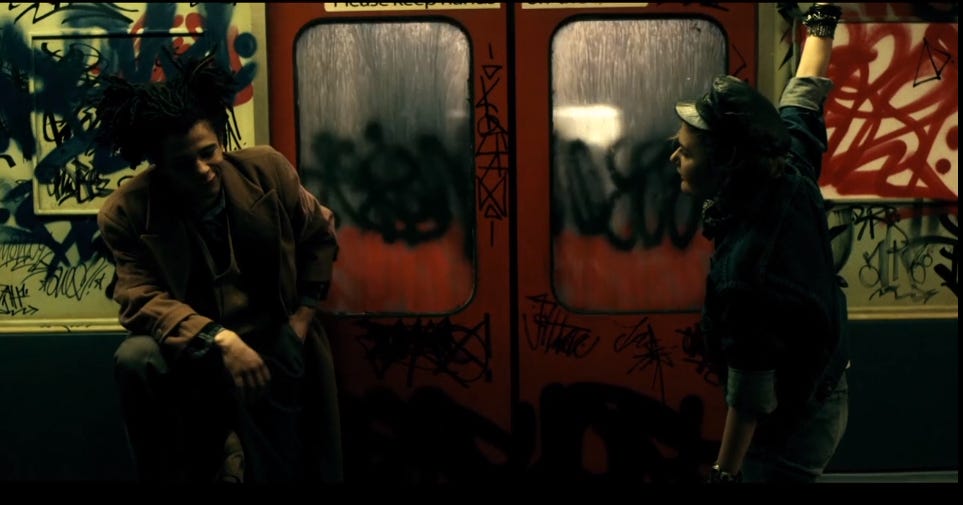
On Dec. 22, 1960, Jean-Michel Basquiat was born in the Park Slope neighborhood of Brooklyn, New York, to Matilde Andrades Basquiat and Gerard Basquiat.
His father was from Haiti. His mother was born in Brooklyn to Puerto Rican parents and he was raised Catholic. Basquiat’s mother encouraged his early interest in art, taking him to museums and enrolling him as a junior member of the Brooklyn Museum. He learned to read and write by age four and later became fluent in French, Spanish and English.
In 1968, when he was seven, Basquiat was struck by a car while playing in the street. He suffered internal injuries and had his spleen removed. During his hospital stay, his mother brought him a copy of “Gray’s Anatomy,” a book that remained a lasting influence on his work, especially his repeated references to bones, organs and other anatomical imagery.
Basquiat entered adolescence amid family instability. After his parents separated, his father raised Basquiat and his sisters. His mother was later hospitalized for psychiatric treatment. As a teenager, Basquiat rebelled and ran away at 15, sleeping in parks and drifting through Manhattan.
By the late 1970s, he had begun making his name downtown as part of the graffiti duo SAMO with Al Diaz. The pair wrote short, enigmatic slogans on walls in Lower Manhattan, including SoHo and the Lower East Side, as Basquiat moved through a scene where punk, hip-hop and visual art overlapped. The street work drew press attention and helped establish his reputation before he was widely shown indoors.
In 1980, Basquiat began exhibiting in group shows, including the Times Square Show. In 1981, he appeared in the “New York/New Wave” exhibition at P.S.1, and that year art critic Rene Ricard published an influential Artforum essay that helped propel Basquiat into the art-world spotlight. “I’m always amazed by how people come up with things. Like Jean-Michel,” Ricard wrote.
His ascent into major institutions was swift. In 1982, at 21, Basquiat became the youngest artist to participate in Documenta in Kassel, Germany. At 22, he became one of the youngest artists to show in the Whitney Biennial in New York. Around this period, he met Andy Warhol, beginning a friendship that later developed into collaborations. Warhol recalled their first lunch together: “I took a Polaroid and he went home and within two hours a painting was back, still wet, of him and me together.”
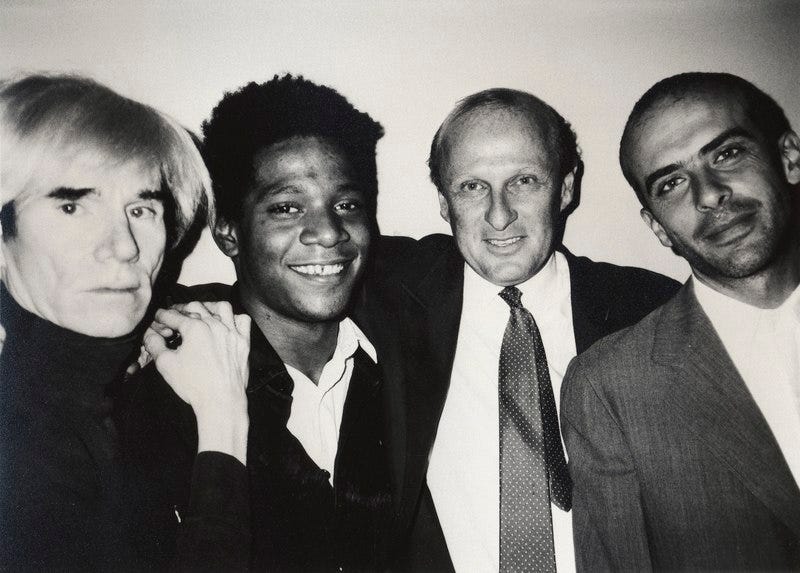
Basquiat died Aug. 12, 1988, at age 27, of a heroin overdose in Manhattan. In the years after his death, major museums mounted retrospectives, including a 1992 exhibition at the Whitney Museum of American Art, cementing his posthumous stature.
His market value rose sharply over time.
In 2017, his 1982 painting “Untitled” sold for $110.5 million, a landmark price for his work. Friends and peers continued to emphasize the scale of his output and impact. In an obituary for Vogue, artist Keith Haring wrote, “He truly created a lifetime of works in ten years.” In 2025, New York City co-named a block near his former home “Jean-Michel Basquiat Way,” a public marker of an artist born on this date.