




A new cost-sharing law could potentially lead to the end of SNAP in a number of states, according to experts.
Historically, the federal government has provided all the funds for the SNAP program. However, with a key provision of the tax and spending package, states might be forced to provide the majority of funds for the benefits starting from the fiscal year 28. With the change, the states would then have to modify requirements or end their SNAP benefits completely.
The Trump administration has also threatened to withhold funding for several Democratic states if they do not provide the personal information of those who receive the benefits. Requested data includes their immigration status and their Social Security numbers.
With the administration’s planned changes to SNAP and the overall delay, a number of communities that rely on the benefits have been impacted.
Here are five key facts about SNAP and how the program has shaped, and continues to shape, life in Black communities.
Black-owned farms are helping provide food where SNAP delays are still apparent. Speaking to Capital B, one North Carolina farmer, Cherie Jzar, has offered customers- most of whom are seniors- free bags of produce as SNAP delays continue. The Deep Roots CPS Farm has given the majority-Black Historic West End neighborhood produce such as kale, radishes, greens, strawberries and blueberries. Jzar and other farmers have also joined initiatives such as the Double Up Food Bucks program.
Through the initiative, customers can use SNAP EBT dollars and match them up with the Double Up Food Bucks to get double the produce for the same amount of money. Any SNAP recipient is automatically eligible for the initiative.
The “welfare queen” stereotype stemmed from the story of Linda Taylor. The term was initially used by the Chicago Tribune in a story about Taylor. Taylor, who was listed as white in the 1930 Census amidst claims that her race was unknown, had been in the news for welfare fraud and had a long history of scamming, assuming different identities and races to commit welfare fraud. She was also connected with multiple child kidnapping cases and potential murder cases. In 1974, she was arrested for her welfare crimes and, in 1978, she was sentenced to a term in an Illinois prison.
During his failed 1976 campaign, Reagan used Taylor’s story as a focal point, exaggerating her crimes to create a stereotype as a way of denouncing the benefits. Per Reagan, she received $150,000 during her schemes. In reality, Taylor took less than 10% of that, totaling $8,000 in theft. The stereotype created by Reagan was linked with that of Chicago and implied poverty, beginning the association of the “Welfare Queen” stereotype with Black women.
Black Americans have been incorrectly identified as comprising the majority of SNAP recipients. The stereotype has been inaccurately perpetuated for decades, linking Black communities with high rates of welfare. Per the Pew Research Center, however, white people have been identified as overwhelmingly making up most of the recipients of SNAP benefits. According to the latest statistics, as of 2023, they accounted for nearly 61% of SNAP recipients. Black families, on the other hand, accounted for only 28.7% of SNAP recipients as of 2023. Overall, per the U.S. Department of Agriculture, 37% of SNAP recipients are now white while only 26% are Black.
Lack of SNAP benefits could increasingly negatively impact Black communities, particularly as Black unemployment increases. The rate for Black unemployment went up to 7.5% from 6.2% this year, the highest it has been since October 2021. A significant part of the unemployment increase came as the Trump administration targeted DEI initiatives, particularly in the federal government. Amidst the administration’s job cuts, Black women were amongst those most affected by the layoffs, as they specifically make up 12% of the federal workforce. The administration has also downsized programs such as the Minority Business Development Agency under the efforts to target DEI and cancelled partnerships with small businesses and non-profits.
These changes disproportionately affected Black women. In response, Congresswoman Ayanna Pressley has sounded the alarm, reaching out to Federal Reserve Chairman Jerome Powell and demanding that action be taken to address the rising unemployment rate for Black women.
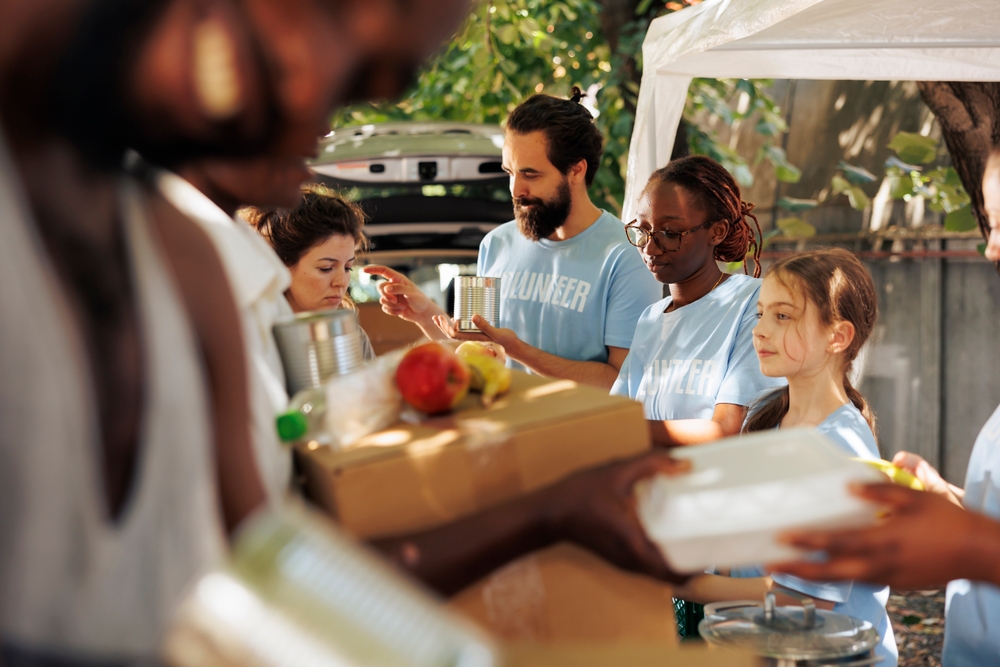
Communities are banding together to provide food for families affected by SNAP delays. In cities such as Atlanta and Colorado, schools have reached out to families to provide free food. In NYC, schools are also setting up fundraisers, food pantries and encouraging donations from community members to secure extra food for those families that are at risk of food insecurity. Black churches are also offering support in times of need. Faith Communities Today published a survey showing that over 60% of Black churches have opened up their doors and provided food to the communities through meal programs, distribution partnerships and food drives.
Due to SNAP delays, they have reportedly been preparing food for twice as many people as usual, providing food for up to 2,000 people daily.