

The 1917 Houston Riot Trials Were America’s Original Broken Justice System

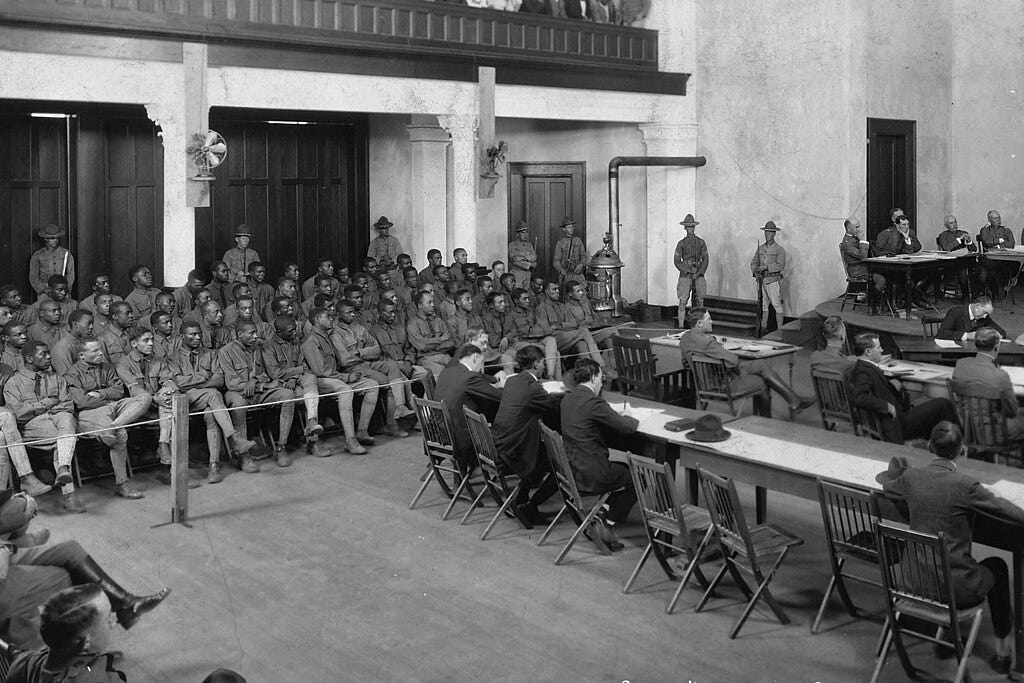
On Dec. 11, 1917, 108 years to the day, 13 Black soldiers were executed in what is known as the largest mass execution in the U.S. Army’s history, just hours after being denied a fair trial and the right to appeal.
The soldiers, all from the 24th Infantry Regiment, were part of a mass conviction that initially ended with an all white jury ruling that 54 soldiers should all be convicted for mutiny and murder. Of the 63 individuals, thirteen were condemned to death, with the verdict only being conveyed to them 12 hours before the execution.
“When this letter reaches you, I will be beyond the veil of sorrow,” wrote soldier T.C. Hawkins hours before his death in a letter obtained by CBS News. “I was sentenced to be hanged for the trouble that took place in Houston, Texas, although I am not guilty of the crime that I am accused.”
In July 1917, the 24th Infantry Regiment was initially deployed to Houston to help guard the construction of Camp Logan. Upon their arrival, they were instantly victims of abuse. Sent to the Red State during the Jim Crow era, the soldiers were subjected to regular beatings at the hands of police officers and were often verbally abused and discriminated against. Along with the physical violence, the soldiers and citizens were often arrested on baseless charges.
The arrests made on Aug. 23 led to what is now known as the “1917 Houston Riot.” Around noon, the local police officers arrested a Black woman for public drunkenness after dragging her from her own home. When a soldier intervened and asked for the reasoning behind why the woman was being arrested, he was promptly beaten and arrested as well. A head figure of the 24th Infantry Regiment, Cpl. Charles Baltimore was beaten and shot at himself once he went to the police station to figure out why the soldier was arrested.
With the two arrests and the ensuing rumors that Baltimore was murdered, word reached the soldiers that a white mob was headed their way. Immediately, more than 150 Black soldiers of the 24th Infantry left for Houston to confront the police over their series of abuses, ready to defend themselves from the mob of white people. Once they reached the outer edge of the city, they clashed with the mob, leaving four soldiers, 12 civilians and four policemen dead.
The soldiers were promptly arrested and forced to leave the town, leaving their families in the dark about their location. Per Hawkins’ mother, the soldier was only told that he was “present serving with his organization.” In what is considered the largest murder trial in U.S. history, 63 out of over 100 soldiers were put on trial as part of the first of the three courts-martial. Approximately 54 soldiers were convicted on all charges after only a two-day deliberation period; while 41 were convicted of life imprisonment, 13 soldiers were condemned to death.
Along with the implementation of an all-white jury, the soldiers were improperly treated and did not receive a fair trial. The only defense counsel, Major Harry Grier, was given just 10 days to prepare to argue on their behalf. Grier was also not a licensed attorney in the first place, according to the Houston Chronicle.
Denied the opportunity to appeal, the 13 soldiers were killed using a scaffold made overnight over what is now known as the Fort Sam Houston golf course. Each body was placed in plain pine coffins before it was buried yards away. Their graves were not marked by their names, but by a single number. By noon, the scaffold was dismantled to hide evidence of their murders.
Over a decade later, the U.S. Army announced that all convictions of the 110 soldiers charged overall for the 1917 Houston Riot were set aside. The decision to do so stemmed from lobbying by the soldiers’ family members, who filed a clemency petition on their behalf.
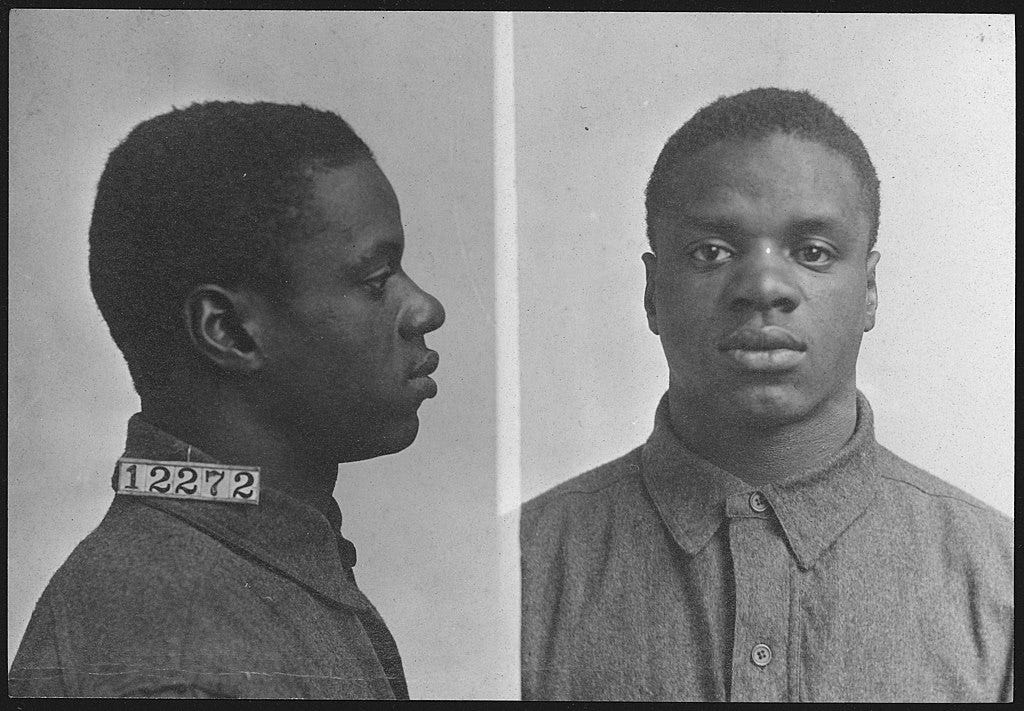
In a statement, the then-Secretary of the Army, Christine Wormuth, acknowledged the role that race played in these convictions and in the decision to deny the defendants the right to a fair trial. The soldiers were also given honorable discharges and new proper headstones.
Upon the announcement, descendants of the soldiers welcomed the attempts to make amends, but emphasized the impact the decisions had on those who were killed based on false accusations.
“It’s sad to think about so many soldiers – 110 soldiers – affected like this and families like mine,” said descendant Fatimah Gilliam, according to CNN. “My great-great-uncle Jesse Ball Moore was executed, and he didn’t get to live out his life in its entirety.”