

Texas State Rescinded a Black History Exhibit After Invoking Anti-DEI Legislation

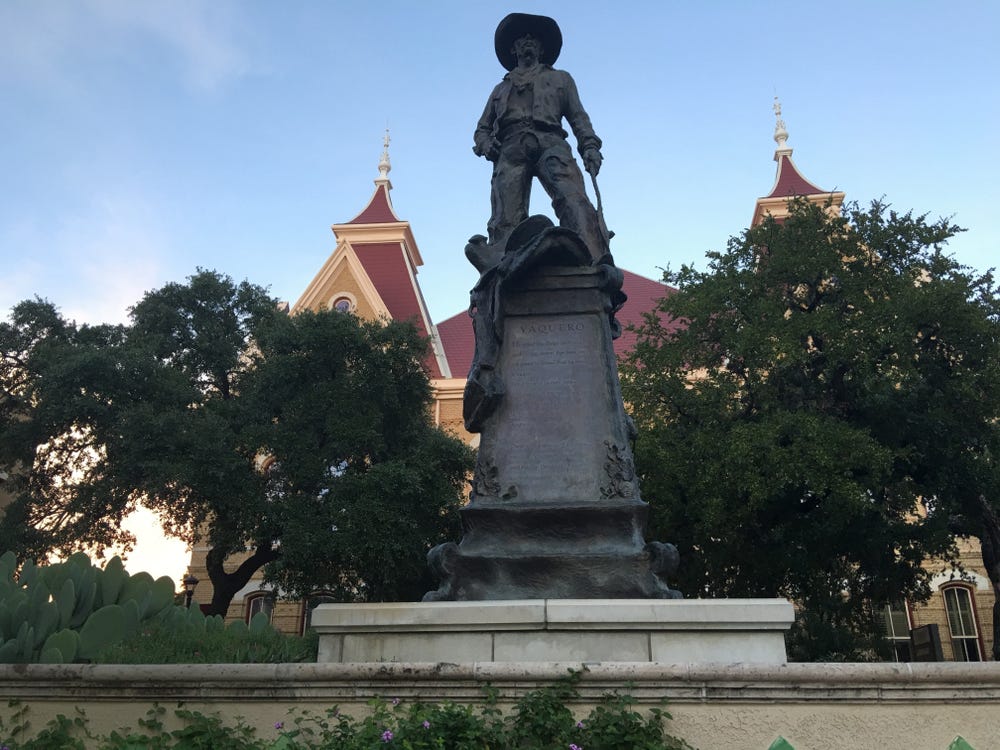
Texas State University officials recently rescinded an invitation to host a traveling Black history exhibit on their campus, citing Texas's anti-DEI legislation as the reason why.
Announced in an email sent to the founder of the exhibit, Dr. Khalid el-Hakim, the university reportedly claimed that the Black History 101 Mobile Museum was not “approved” to be at Texas State University due to “SB-17, the current climate of our state and certain topics covered,” according to the Austin American-Statesman.
Originally passed in 2023, SB-17 refers to Texas Senate Bill 17. Along with limiting real estate for foreign nationals, the bill prohibits higher education institutions from participating in DEI activities, programs and initiatives.
Dr. el-Hakim was originally invited to bring the exhibit to Texas State University through an invitation sent in October. The exhibit would have been temporarily installed on campus to celebrate the upcoming Black History Month. Featuring more than 50,000 items, including more than 15,000 original artifacts, the Black History 101 Mobile Museum has been on display at schools such as the University of Miami and Stony Brook University, educating students from K-12 and above about Black history. Topics discussed include the Civil Rights Movement, politics and religion.
In a statement, the civil rights nonprofit the Legal Defense Fund denounced Texas State University’s actions, highlighting how the cancellation of the exhibit violates the First Amendment, misconstrues the law and is discriminatory.
In response, a spokesperson for Texas State University, Jayme Blaschke, said via the Austin American-Statesman that the department made the decision not to host the Black History 101 Mobile Museum and that the email incorrectly attributed the decision to Senate Bill 17. The university is reportedly “reconsidering” bringing the exhibit to campus in February.
“For 30 years, the Black History 101 Mobile Museum has traveled to more than 1,000 institutions without ever being silenced,” said Dr. el-Hakim (he/him), per the LDF. “In today’s national climate of censorship, Texas State’s decision is not only alarming but part of a broader attempt to control which histories can be told. As Dr. Martin Luther King Jr. reminded us, ‘There comes a time when silence is betrayal,’ and students deserve better. I urge the university to stand firmly on the side of academic freedom.”
The latest move to block the display of the Black History 101 Mobile Museum comes months after the American Civil Liberties Union of Texas announced a lawsuit against the state, citing unconstitutional student identity censorship. Announced in late August, the lawsuit, filed alongside the Transgender Law Center and Baker McKenzie, opposed SB-12, a bill that bans any programs associated with race, gender identity and sexual orientation among students from pre-K to 12th grade.
According to the civil rights organization, it includes a ban on activities that celebrate Black, Latine, Asian and Indigenous history.
“This law isn’t about improving education — it’s about weaponizing it,” said Cameron Samuels (they/them), executive director at SEAT, per a statement. “S.B. 12 seeks to erase students’ identities and make it impossible for teachers, parents and volunteers to tell the truth about the history and diversity of our state. The law also guts vital support systems for Black, Brown, Indigenous, Asian and LGBTQIA+ students and educators.”
The Houston Chronicle reports that the ACLU asked for an injunction to be placed on the new law, arguing that it violates the First Amendment, the Fourteenth Amendment and the Equal Access Act.
The judge has not yet made the ruling official.