

Race Didn’t Cause Sherrone Moore’s Drama, but It Plays a Role in It

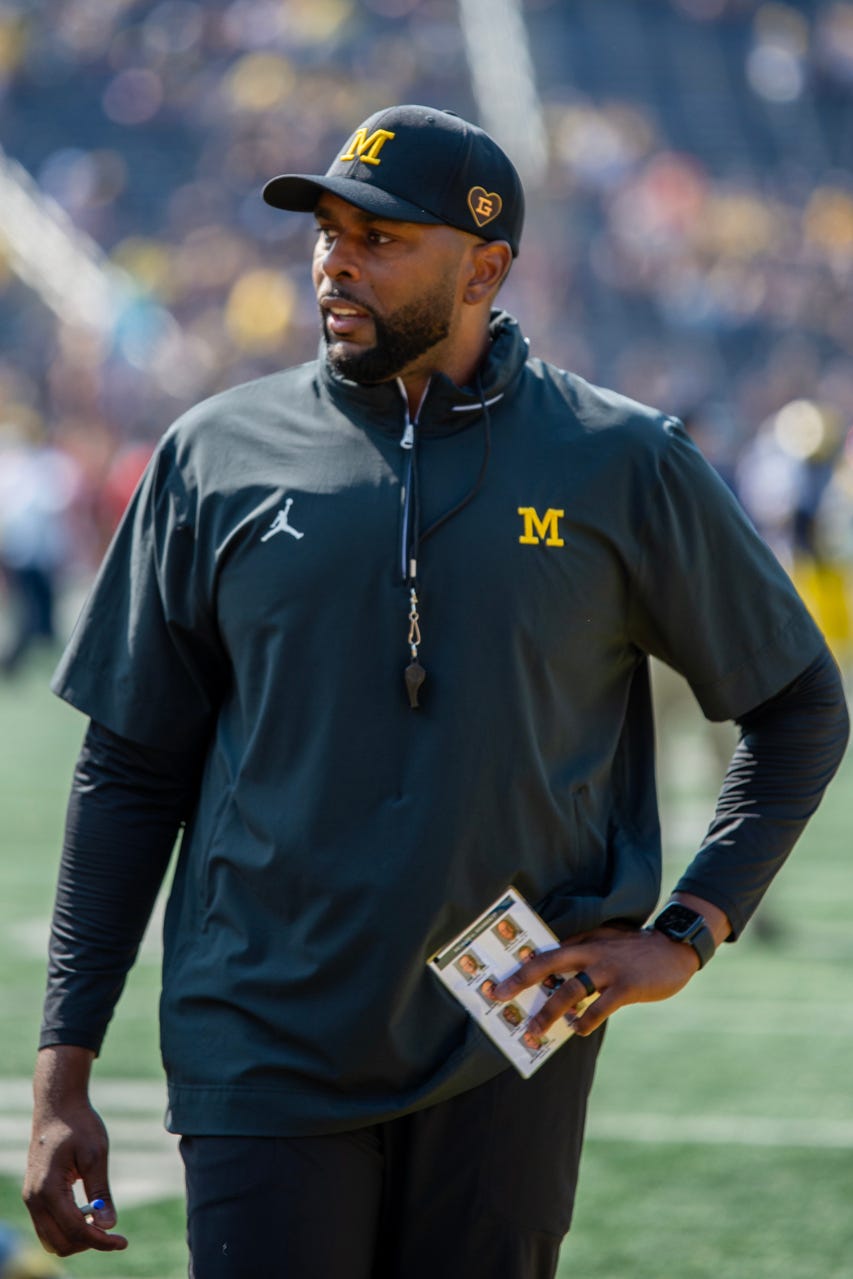
By now, you’re familiar with the strange, disturbing, confusing and sad situation involving former Michigan Wolverines head football coach, Sherrone Moore.
In January 2024, after succeeding CFP title winning coach Jim Harbaugh, Moore made history as the first Black head football coach in Wolverines history.
It was a celebratory moment, especially for Black football coaches aspiring to become head FBS coaches.
“I want to thank Coach Harbaugh for the faith that he has displayed in me over the past six years and for supporting my growth as a football coach during that time,” said Moore in a statement at the time. “I also want to thank Athletic Director Warde Manuel, President Santa Ono and members of the Board of Regents for putting their faith and trust in me to be the next leader of this football program. I am excited to reward that trust.”
Two years later, after compiling a 17-8 record over two seasons, Moore, has broken that trust and shattered the faith of those involved.
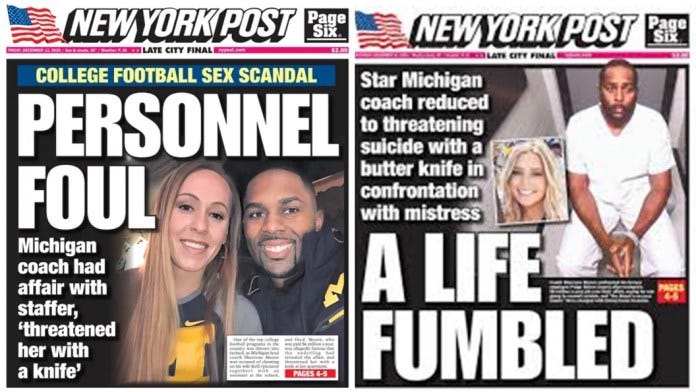
Moore, who is married with three daughters, was having an affair with a staffer which they both denied to their boss. He gave her a massive raise, she broke the relationship off and then admitted to the affair. Moore was fired for violating the “decency and morality” terms of his contract, broke into her home, threatened to commit suicide, was arrested, charged with third-degree home invasion, breaking and entering and stalking, posted bond and has been released with a monitor.
While many opinions have surfaced, there is no denying that race plays a part in the situation.
Not in the cause, but definitely in the aftermath.
Moore is Black and both his wife and his mistress are white, interracial relationships that involve varying stereotypes, pitfalls and jokes regarding a Black man’s kryptonite (white women), “jungle fever”, and “messing it up for everyone”.
Yet for some reason, this situation feels different.
Is it because Moore was already married to a white woman, or is it because few outside of the sports world were familiar with him, something that’s comedically obvious due to the amount of confusion between Sherrone Moore the coach and Shemar Moore the celebrity.
This situation has captured national attention partly because it involves the leader of one of the most storied programs in college football history and because it involves a Black man and two white women, the latter, arguably, being the bigger draw for headlines.
But there have been more intelligent analysis of the situation, including by Jemele Hill, who issued her own take on X in which she addressed the idea of “racial reification”, where, instead of Black people being judged individually, the acts of one Black person symbolizes the Black community in general.
“What I said was that Sherrone Moore’s firing is being used (by some) as some sort of example that there is a wider problem among Black coaches or as an example of why it will be harder to justify hiring Black coaches.
“I find both to be a wider example of how the actions of one Black person is often used to paint all Black people with a bad brush. This doesn’t indict Black male coaches anymore than Lane Kiffin or Bobby Petrino’s actions indict white coaches. But the difference is that white coaches often get a chance to rehabilitate.
“Rick Pitino is seen as a redemption story. Black coaches usually don’t get that. I don’t care about Sherrone Moore. He earned whatever is coming, but unfortunately Black coaches will likely pay for what he’s done — and that isn’t right.”