



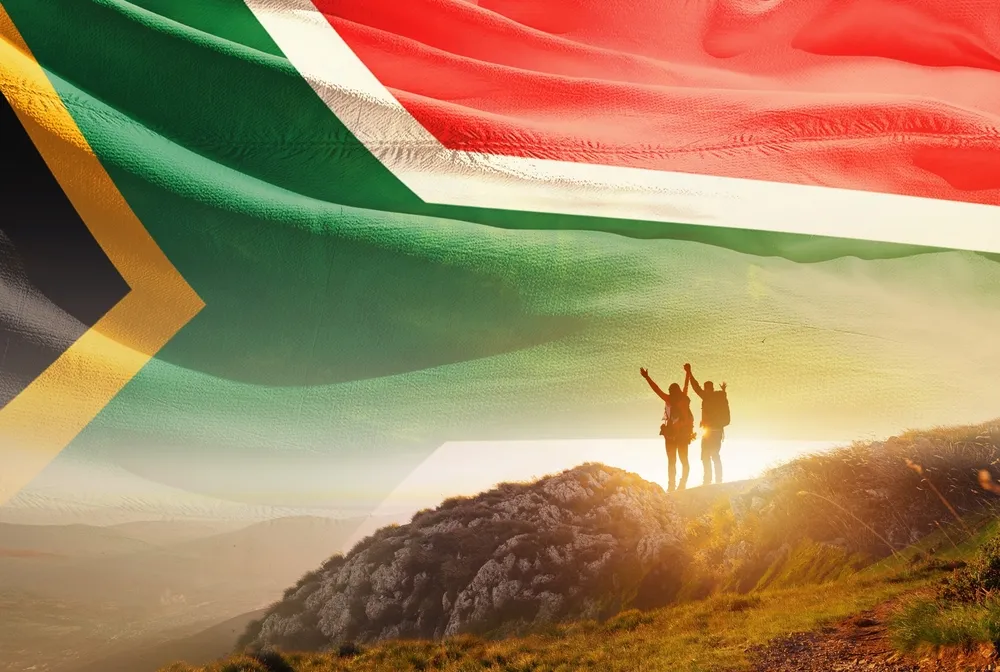
Nothing like walking on the side of a mountain with new comrades in conversation that informs and inspires while the beautiful inner dialogue rises inside you, reflecting on an experience that both wakes you up and settles you at the same time.
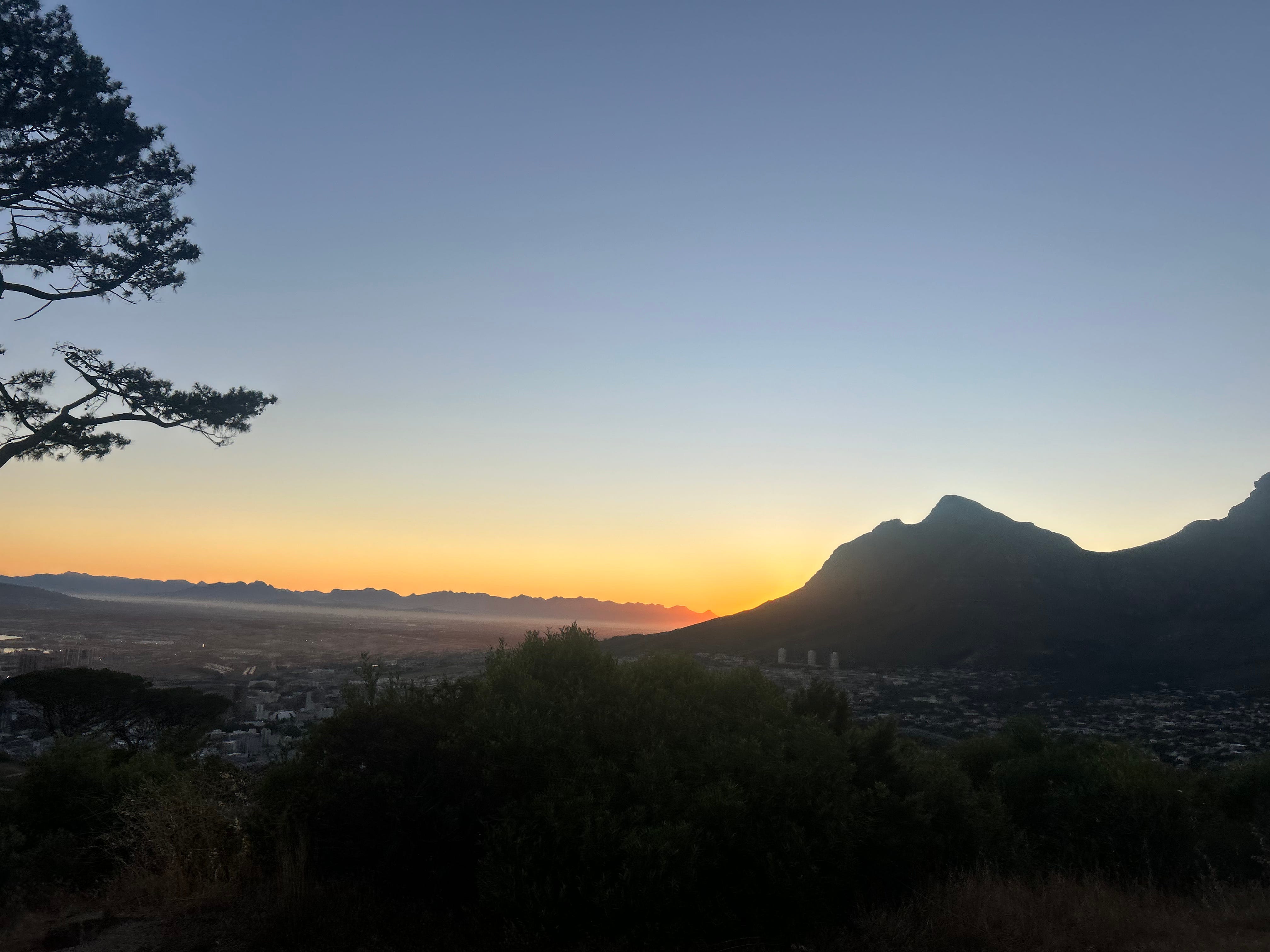
Among the many gifts South Africa placed in my hands, these hikes, these breath-to-breath lessons carved into the slopes of Cape Town, stand out as some of the most quietly transformative.
Cape Town had already dazzled me with its broad strokes of beauty: the Atlantic shimmering like a spilled bowl of blue silk, the city humming with the rhythm of a place that knows both history and hope, and the warmth of people whose hospitality feels inherited from generations of grace. But nothing rewired my understanding of health and movement like the simple act of climbing a mountain with men who treat physical activity not as an appointment but as a lifestyle something woven into their day the way prayer is woven into the life of a believer.
My host in South Africa, may God protect him, is only a year or two my senior, yet his conditioning felt like a quiet masterclass. He lives a life where hiking isn’t a weekend exception, but a ritual; where long walks restore the mind; where martial arts sharpen discipline; where other gems, ones I probably didn’t even witness, anchor his vitality. He didn’t promote health; he embodied it. And without announcing it, he passed me a spark. One that followed me home, making me look at the nature routes here in the United States with a sense of invitation.
Walking and hiking have become globally documented as therapies for the body and mind. Studies show they lower inflammation, strengthen the heart, regulate blood pressure, boost mood, ease anxiety, sharpen cognition and help the body shift from stress to balance. In Japan they call it “forest bathing.” In Cape Town, it simply feels like remembering something your soul knew long before you started living by deadlines and alarms.
One of my final hikes up the iconic Lion’s Head became the moment where the spark turned into a flame. There were three of us making that ascent: myself and two native sons of Cape Town whose companionship stitched the climb into a living, moving classroom. With every turn along the spiral path, the conversation deepened life, history, spirituality, the city’s rhythms, global perspectives. And then, every so often, they would stop and point to what grew along the mountain’s edge.
I hesitate to call them “plants” or “wildflowers,” because that feels too small. On Lion’s Head, they are residents, citizens rooted into the mountainside, elders of the landscape with an unbroken lineage of surviving sun, wind and time.
Leonotis leonurus, known as Lion’s Tail or Wild Dagga. A flame-colored bloom rising from the rocky slope, each petal unfurling like an offering. Its orange clusters stood out against the stone as if the mountain itself had lit torches along the path.
Wild Dagga is more than a visual marvel. It’s a plant with history, with medicine, with story. Traditional healers across Southern Africa have used it for centuries. Scientifically, it belongs to the mint family and contains leonurine, a compound studied for its anti-inflammatory, antioxidant and mild analgesic properties. Communities have brewed it into teas for colds, fevers, chest congestion and anxiety. Others used it to ease muscle pain, snakebite swelling, skin irritations and circulatory issues. Modern research suggests it may help stabilize blood sugar and support heart health.
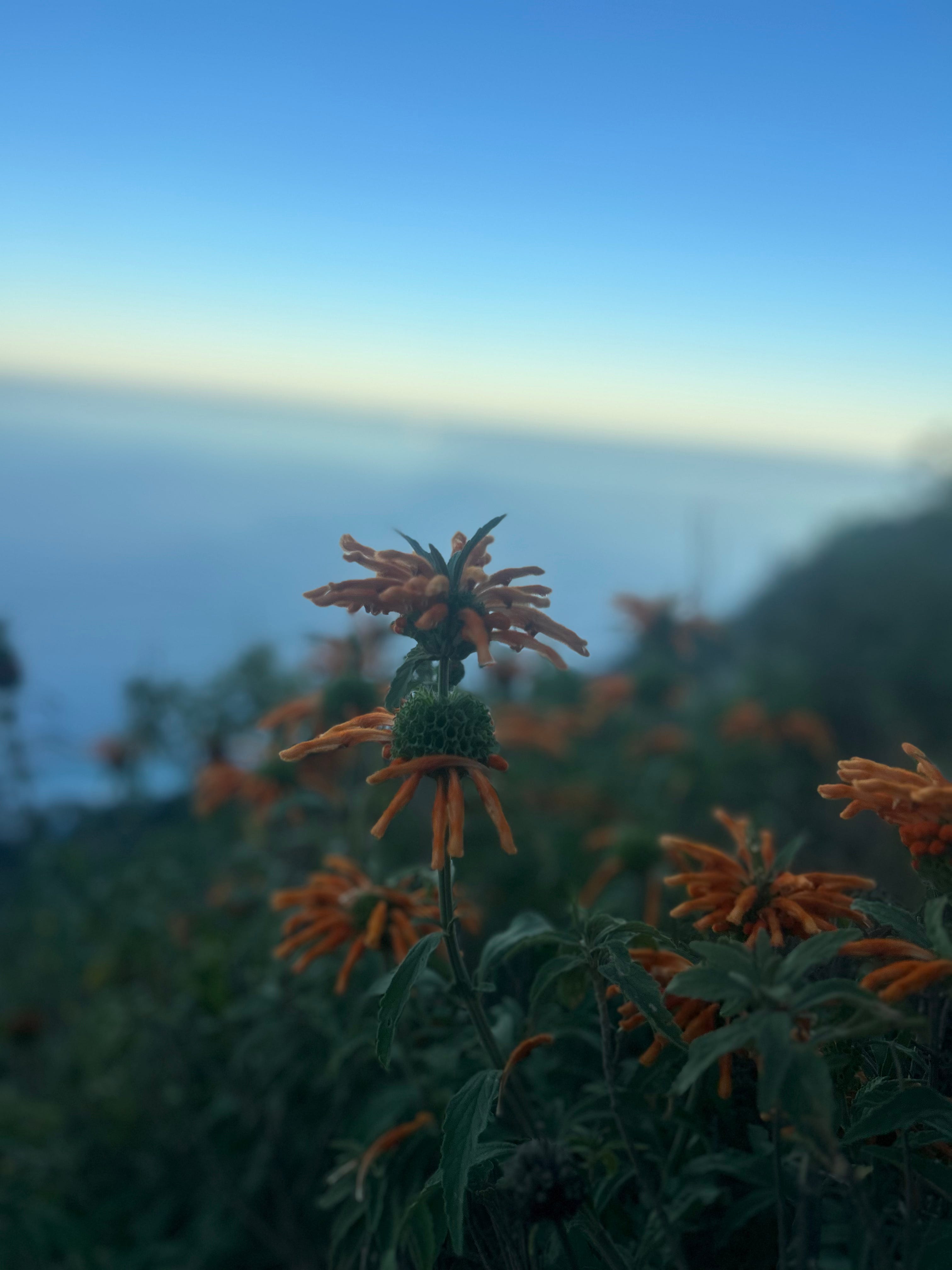
But beyond what the journals say, Wild Dagga offers another kind of wisdom. It grows where life shouldn’t be easy on the dry, wind-carved edges of Lion’s Head, clinging to soil that looks too thin to nourish anything. Yet there it blooms, defiantly bright, resilient, unbothered by the mountain’s challenges.
As we moved upward between laughter, shared reflections, and those nature lessons from my two brothers of Cape Town, that flower stayed in my mind. Something about it felt like a message: healing doesn’t always come from comfort. Strength doesn’t require perfect conditions. Sometimes the most vibrant life grows from the hardest terrain.
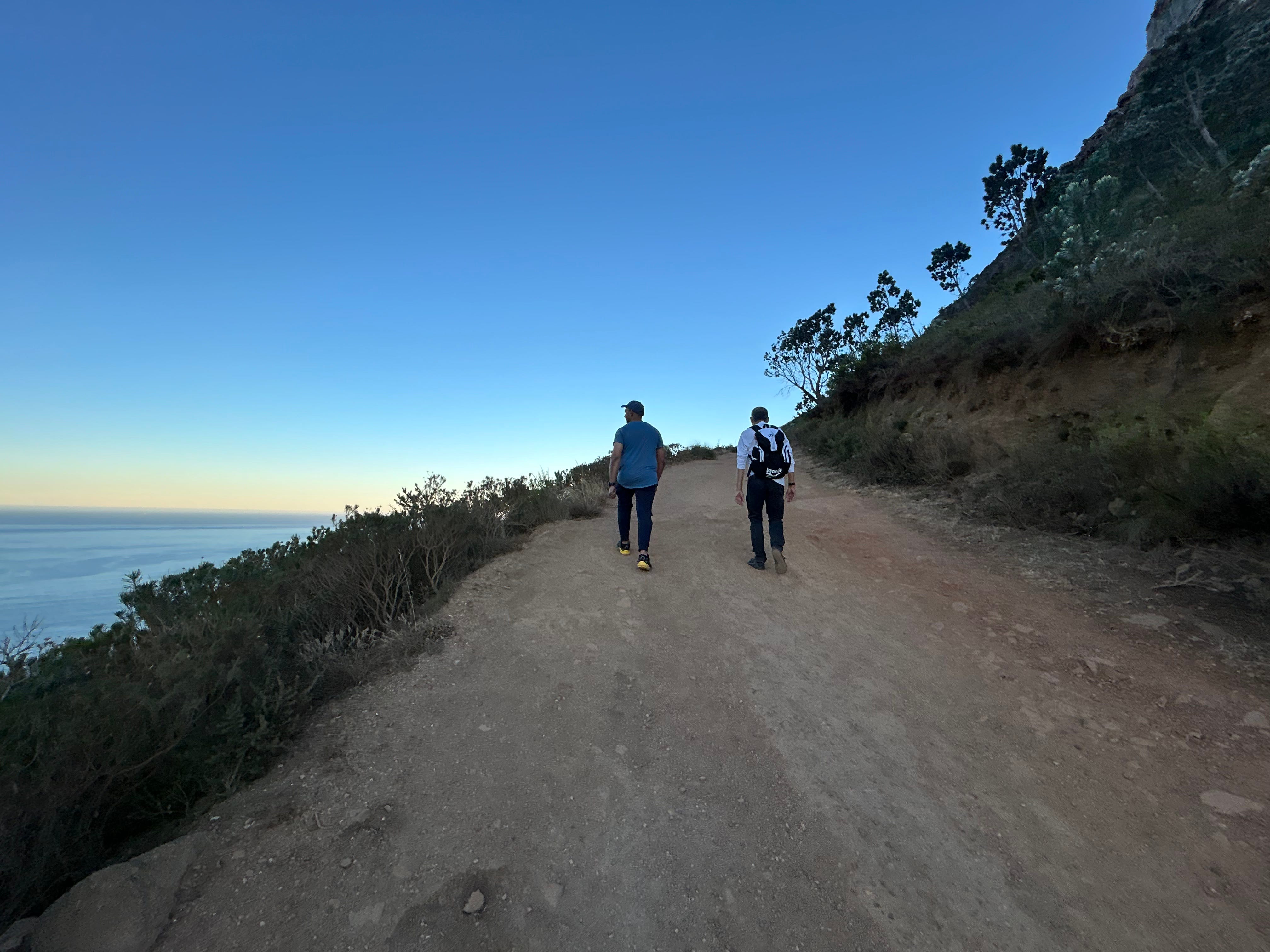
That lesson traveled back with me. It made hiking feel less like an outdoor activity and more like a philosophy of health, one that reaches the physical, emotional and spiritual layers all at once. And as I look toward the many trails across the U.S. waiting to be explored, I feel that same spark that started on a South African mountain.
A spark shaped like movement, like companionship, like breath… and like a bright orange flower daring to bloom on the edge of a cliff.