

Jamaica’s Fight for the Beach Is Really a Fight for Sovereignty

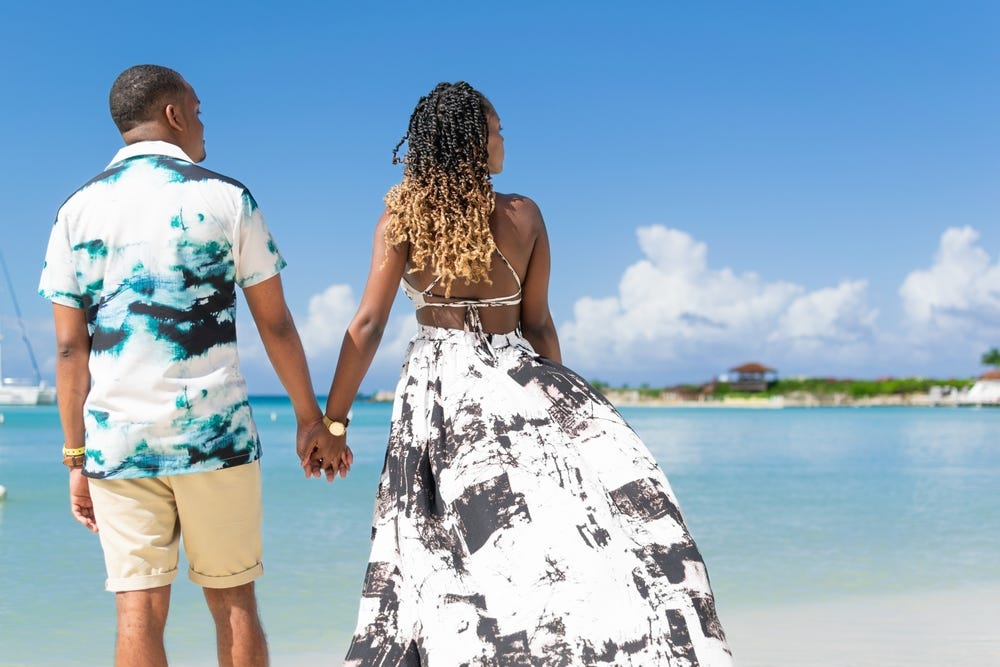
After Hurricane Melissa swept across Jamaica, volunteers, fishermen and local organizations rushed to clear rubble from battered shorelines. Broken boats, uprooted trees and entire homes washed onto beaches from Montego to Portland.
The storm exposed not only the fragility of the island’s coastline but also how few Jamaicans can enjoy it. Jamaica has around 148 miles and less than five miles of those are publicly accessible to everyday Jamaicans.
Jamaica’s National Environment and Planning Agency lists 56 public beaches, but community groups say that number is misleading. Public status can be revoked at any time. Several beaches previously reserved for the public are already listed for divestment, meaning they will be handed to private operators. Once that happens, the owner can decide whether entry is free, restricted or monetized.
Some beaches labeled public on official maps are little more than narrow slivers between hotels. Others are small, heavily eroded or difficult to reach.
Understanding the crisis requires a look back to the past. When slavery was abolished in 1838, formerly enslaved people were not granted land. Large swathes of fertile land and coastal areas were retained and controlled by colonial elites or sold to incoming wealthy families.
A significant turning point came in 1956 with the Beach Control Act. The law declared that the Crown owned all beaches. Authorities said the act would protect beaches for everyone, but the wording told a far different story. It stated that “no person shall be deemed to have any right in or over the foreshore except as may be granted” by the government. This meant that beach access became something the state could grant or withhold, not a right inherent to the public.
Despite independence in 1962, Crown ownership remained in place and to date, the King still legally owns Jamaica’s beaches through the office of the Governor General.
The Jamaica Beach Birthright Environmental Movement (JABBEM) contends that only about 0.6% of Jamaica’s coastline is currently accessible to the public, with most shoreline areas controlled by private interests, including luxury resorts and hotel operators. A study conducted by Devon Taylor, biomedical research scientist and JaBBEM’s president, found that of the 14 miles of Montego Bay’s coastline analyzed, only three small beaches were genuinely accessible.
As attorney Marcus Goffe tells TVJ, “Ownership still lies in the Crown. The authority of the Crown is exercised in the post-independence era by the Commissioner of Lands.”
There has also been some backlash as Jamaica’s political class is deeply intertwined with tourism and real estate, with many owning real estate running into the millions.
Jamaica’s Prime Minister, Andrew Holness, and his family held more than $125 million (JMD) in real estate-related assets as of 2019. Opposition leader Mark Golding earned over $56 million (JMD) in real estate income in 2022. Major business families also hold significant decision-making power. For example, in 2021, Adam Stewart, executive chairman of Sandals Resorts, was appointed as the country’s special investment envoy for tourism. This means one of Jamaica’s most influential hotel figures helps shape national tourism policy.
In a press release announcing his new position, it was also highlighted that Stewart’s appointment makes him the second Chairman in the company’s 40-year history, “preceded by his late Father and Chairman, the Hon. Gordon “Butch” Stewart, a pioneer in Caribbean tourism who broke the ceiling of all-inclusive luxury after founding the organization in 1981 and played a pivotal role in bolstering the region’s popularity.”
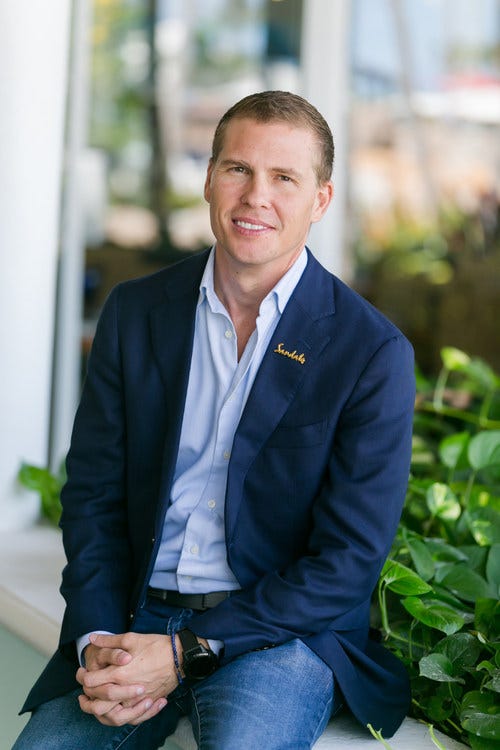
Stewart heralded his father’s legacy, “Some people are dreamers, and some are doers; my dad was the magical combination of both. He was fiercely passionate about offering a product that would exceed expectations, and we are incredibly honored to continue his pursuit of innovation, raising the bar, and creating landmark moments for our valued guests.”
The guests are all but guaranteed paradise, but what about the locals?
There are rumblings of major tourism players stifling not only the smaller tourism businesses run by the locals, but the residents of Jamaica being able to roam their country, feeling, continue to amplify.
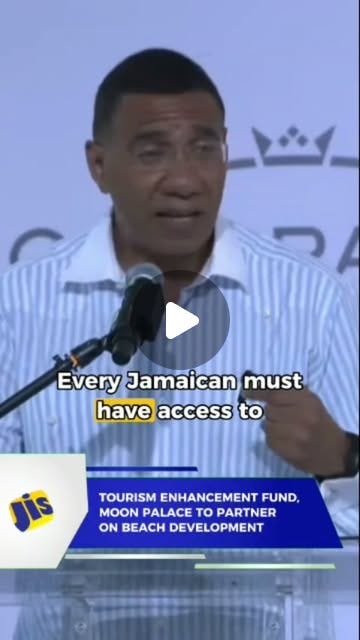
Holness, leader of the Jamaica Labour Party (JLP), has vowed to tackle the issue, declaring that his government is committed to ensuring that “every Jamaican must have access to its beaches,” addressing a long-running national debate during a recent campaign appearance when he attended he attended the opening of the $700 million Moon Palace Grand Hotel in Montego Bay, the island’s tallest planned resort development.
Opposition spokesperson on Justice, Donna Scott-Mottley (People’s National Party), also echoed Holness’s remarks. “We will implement a progressive beach policy that will give the beach people access while balancing tourism and private use,” she said at the time.
“We have as our leader a man who passed the most legislation ever in the history of this country. And it was legislation designed to uplift the people every time[...] We will join the International Criminal Court to reinforce Jamaica’s commitment to global justice.”
Across the Caribbean, most nations guarantee broad public access to their shorelines, but Jamaica remains an outlier under its decades-old Beach Control Act.
While countries such as Barbados and The Bahamas treat beaches as public up to the high water mark, and Antigua and Barbuda goes further by requiring at least one landward public right of way to every beach, Jamaica’s system relies on government licensing and does not grant a general right for people to cross private property to reach the sea. Other islands, including Turks and Caicos and Saint Lucia, have created national policies to map and protect access points, while the Dominican Republic enshrines coastal access in its constitution.
Activists are calling for tourists to also support their cause.
“I think it is time, that when you vacation in Jamaica you ask your resort ‘can a Jamaican walk over your property to get to the beach?’ and if they say ‘no’ then you say ‘well I can’t stay here,’” Taylor noted in an interview with The Voice UK.
For many advocates, the issue extends beyond access to sand and water. It is about identity, dignity and justice. As Goffe explained to TVJ, “Land is a whole lot of memories. It connects people to our ancestry, to our history, to our identity. [...] The monarchy continues to be the head of state and to continue as such carries certain authorities. What we need now is land reform. It is long overdue.”
For Jamaicans, reclaiming their beaches is part of reclaiming their history.