




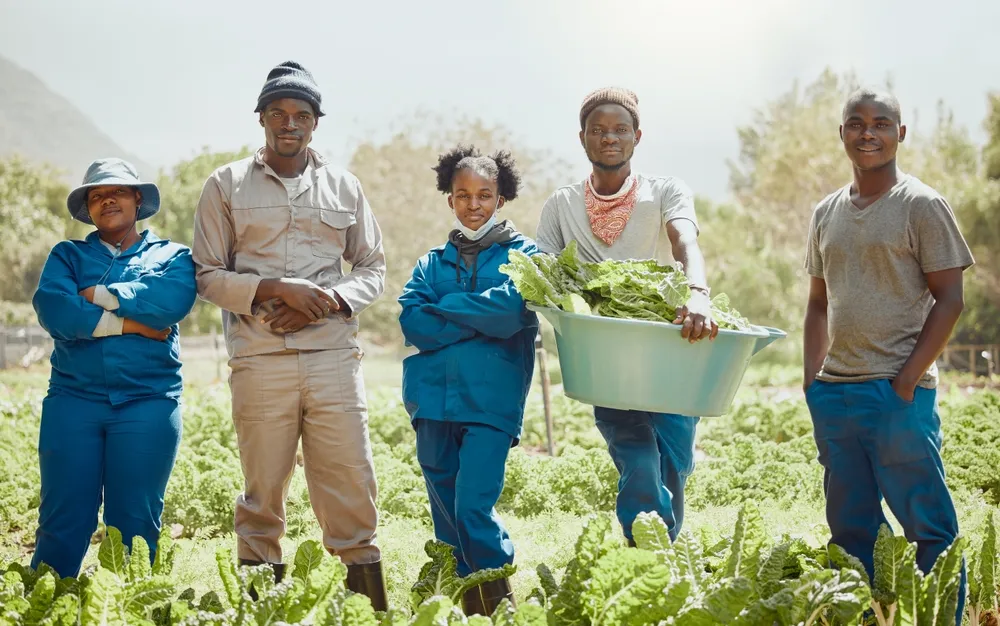
The Black Farmers and Agriculturalists Association announced on Friday that it will opt out of the assistance program announced by the Trump administration.
In a press conference, the leaders of the organization said that they will not participate and accept the Farmer Bridge Assistance funds due to its “racist” undertones and the consistent discrimination that Black farmers have to face.
The Black Farmers and Agriculturalists Association also announced that they will not remain indifferent to the failure to address decades of inequities. The organization also says that the aid does not include farmers in the tobacco, pork, sugarcane, peanut and livestock sectors. A majority of farmers who cultivate these products are Black. Instead, the BFAA is urging the administration to be impartial with the money.
Announced late last week, the Farmer Bridge Assistance Program is a $12 billion initiative that will make one-time payments to farmers. The funds are said to stem from tariffs.
They will reportedly be distributed by Feb. 28, 2026.
Moving forward, the BFAA is expected to ask for hearings from the House and Judiciary Committees.
“It’s not a matter of us being anti-farmers. I am a farmer, I was born a farmer, I live to be a farmer, and I will die a farmer,” said BFAA President Thomas Burrell. “This is not anti-farming; this is about fairness.”
Throughout the past few decades, the assistance that Black farmers have received has dropped.
Per the Legal Defense Fund, in 2022, the USDA announced direct loans to just 36% of Black farmers. Approximately 16% of Black farmers were denied, recording a higher denial rate than any other demographic. Meanwhile, only 4% of white farmers were denied a loan, while 72% received funds.
Overall, according to Data For Progress, the amount of Black-owned farmland has gone down by 90%. Reasoning behind this can be attributed to the denied loans and credit, lack of legal support when faced with fraud, as well as “acts of violence and intimidation.”
Along with these systemic issues, Black farmers have been negatively impacted by tariffs and the U.S. trade war with China. The overall farming sector has already lost billions of dollars in U.S. soybean sales due to China’s pause in purchasing U.S. products. The total number of losses for farmers is expected to reach $34 billion.
Both the trade war and tariffs are exacerbating existing high input costs and weak profit margins. In the past two years, the American Farm Bureau Federation announced that the pricing of crops has gone down, creating an economic crisis for farmers as they try to pay household bills and operating costs.