




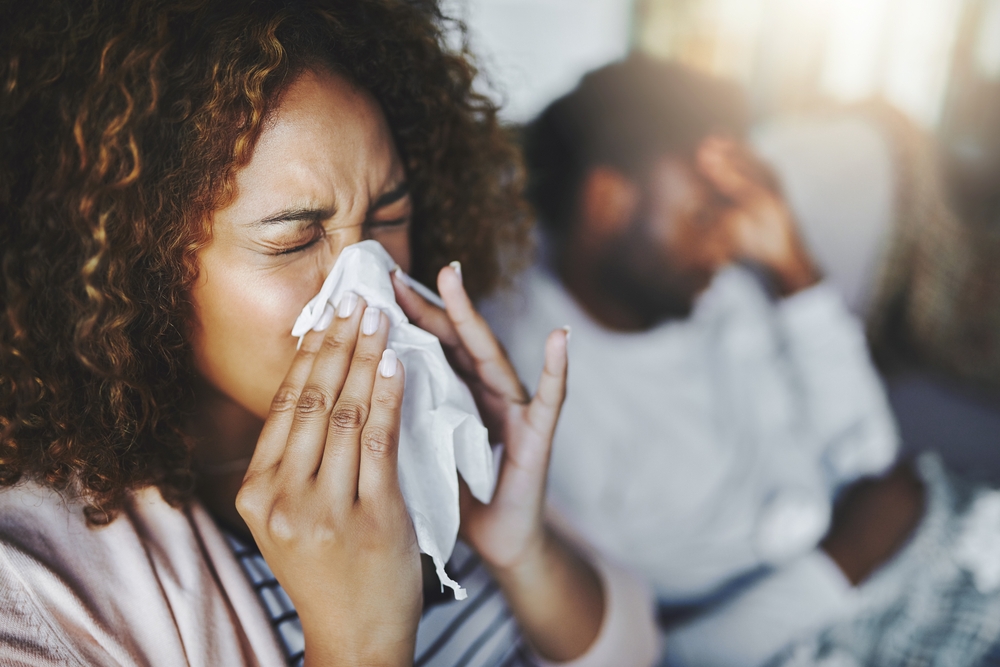
It looks like the United States might be in for a tough flu season. Early signs indicate the virus is already packing a punch.
Recent reports indicate that this year’s strain is causing worse symptoms than what we saw last year, but what’s also really concerning is how quickly it’s spreading and how early it’s showing up.
Just a day after the government shutdown ended, scientists at the Centers for Disease Control and Prevention (CDC) unveiled the troubling news, as reported by science and global health specialists at The New York Times. Although flu infections are still on the lower side overall, they’re creeping up in 39 states, which has many health officials on high alert.
The culprit behind this uptick is the H3N2 virus, notorious for causing more severe symptoms compared to last year’s H1N1 strain. What’s particularly alarming is that H3N2 has undergone at least seven mutations over the summer, allowing it to dodge immune protection from previous infections and vaccinations. This means that even those who might have thought they were safe could be at risk.
According to the Health Security Agency in Britain, the flu vaccine plays a critical role in reducing the number of hospital visits, particularly during peak flu seasons. It proves effective about 70% – 75% of the time in children, while its efficacy drops to around 30% – 40% in adults. However, Derek Smith, a flu expert and director of the Center for Pathogen Evolution at Cambridge University, acknowledges that while the vaccine may not completely prevent infection from new strains, it still provides significant protection against extreme illness.
“It is absolutely clear that the vaccine may not stop people getting infected with the new variant,” he told The Times. “{But it} will still help to protect against severe disease.”
It’s also important to note that the CDC has also recently reported that Covid cases are either increasing or remaining steady across several states. The good news, though, is that hospitalizations remain quite low. While the agency didn’t provide an update on another seasonal illness, respiratory syncytial virus (R.S.V.), other sources have pointed out that R.S.V. cases are slowly on the rise, particularly leading to more hospitalizations among children under 5.
According to the CDC’s August, 2024 data, flu seasons in the United States often mirror the patterns of winter in the Southern Hemisphere, and this year, Australia faced an unprecedentedly harsh flu season.
Now, as we shift into the Northern Hemisphere’s flu season, Britain is experiencing a worrying trend too, with cases starting a month earlier than usual and currently three times higher than last year. The National Health Service has taken notice and is sounding the alarm with a “flu jab SOS,” urging the public to get vaccinated to help curb the surge.
Meanwhile, Japan isn’t far behind in the flu frenzy; the Tokyo city government has issued its first flu warning since 2009, leading to over 1,100 school closures by November 9 – a stark contrast to just 99 closures at the same time last year.
Although flu rates in the United States are currently low, health experts caution that this could change soon, especially as families continue to come together for the holidays. Sam Scarpino, a public health expert at Northeastern University, stated, “We’re likely a few weeks out from things getting really serious, and that means now is the time to get vaccinated, because it takes a couple of weeks for full protection.”
On top of that, vaccination rates for respiratory illnesses in the United States are still lagging. For example, most doses administered at Walgreens pharmacies are primarily going to adults aged 55 and older, particularly those 65 and up. Rick Gates, the chief pharmacy officer at Walgreens, pointed out that the uptake in younger age groups has been disappointingly low. He stressed that while it’s crucial for older adults and young children to get vaccinated, there’s still a significant risk if family members remain unvaccinated and inadvertently bring viruses home.
Research has shown that digital reminders, including text messages, social media postings and emails can greatly boost vaccination rates, making them a valuable tool in public health campaigns. But in February, during a particularly severe flu season, the Trump administration halted the CDC’s flu vaccination campaign, which had a playful theme featuring a tiger and a kitten to illustrate how the vaccine could help make flu symptoms less severe.
This abrupt stop left many wondering about the messaging’s effectiveness, especially since engaging visuals can resonate well with the public. In response, Andrew Nixon, a spokesperson for the Department of Health and Human Services, shared that the CDC shifted gears to launch a new campaign aimed at preventing respiratory diseases by reaching “people where they are – online, in their communities, and through trusted health partners.”
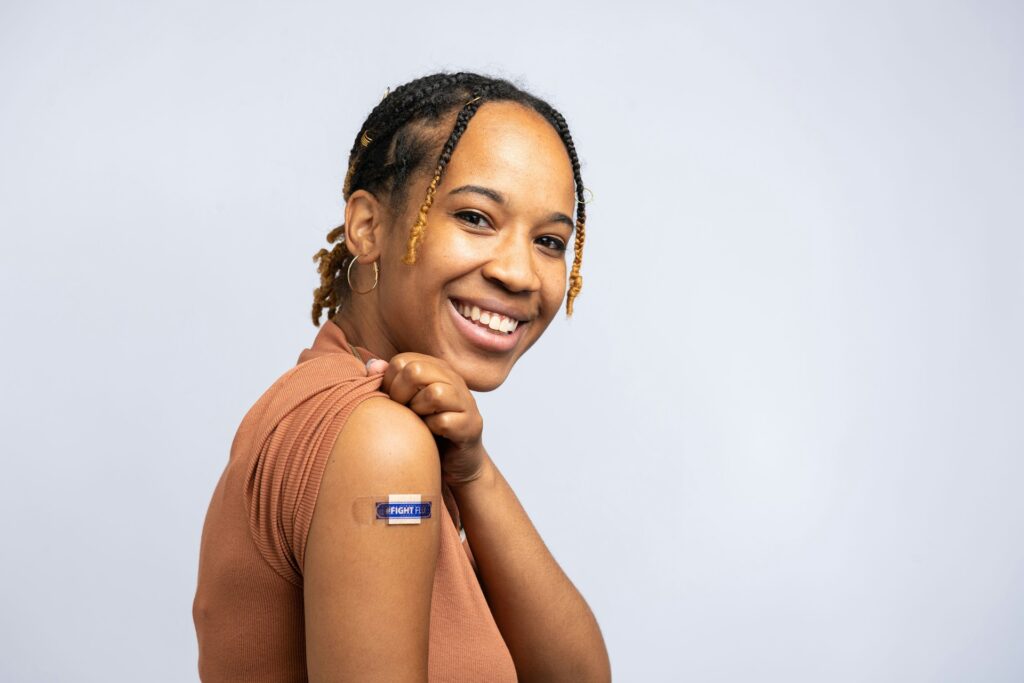
He continued, “The decision to vaccinate is a personal one. People should consult with their health care provider to understand their options to get a vaccine and should be informed about the potential risks and benefits associated with vaccines.”
However, Dr. Fiona Havers, who was in charge of the CDC’s respiratory disease data before she resigned in June, expressed grave concern that the government’s statements and weak recommendations could lower people’s trust in vaccines.
She warned, “The way that vaccines have been talked about means that we’ll see decreasing rates of vaccination in high-risk populations, and potentially more vaccine-preventable deaths.”
The Times also reported how, in children, flu infections can cause uncommon issues, such as brain damage and heart problems. And scientists in Britain have discovered a new variant known as H3N2 subclade K that spreads more rapidly than the typical seasonal flu. They estimate that each infected person will pass the virus to about 1.4 other individuals on average, which is notably higher than the usual spread rate of around 1.2 for seasonal flu viruses. This increase in transmissibility could potentially lead to millions more cases this year. Plus, the CDC has also announced that the virus is spreading at similar rates in various states.
With this in mind, Dr. Smith says that as the virus makes its way from children to older adults, “There are very clear signals that it’s going to sweep the world, and it’s going to sweep the world quickly. We know the numbers are likely to be higher than usual, but we don’t yet know how nasty it is.”
That data won’t be available for another few weeks.
With everything going on in this country right now (managing our daily lives is already a bit of a juggling act) the last thing we need is to be sidelined by an illness most of us can avoid. So, let’s keep our guards up and do our best – and our part – to stay healthy this season!